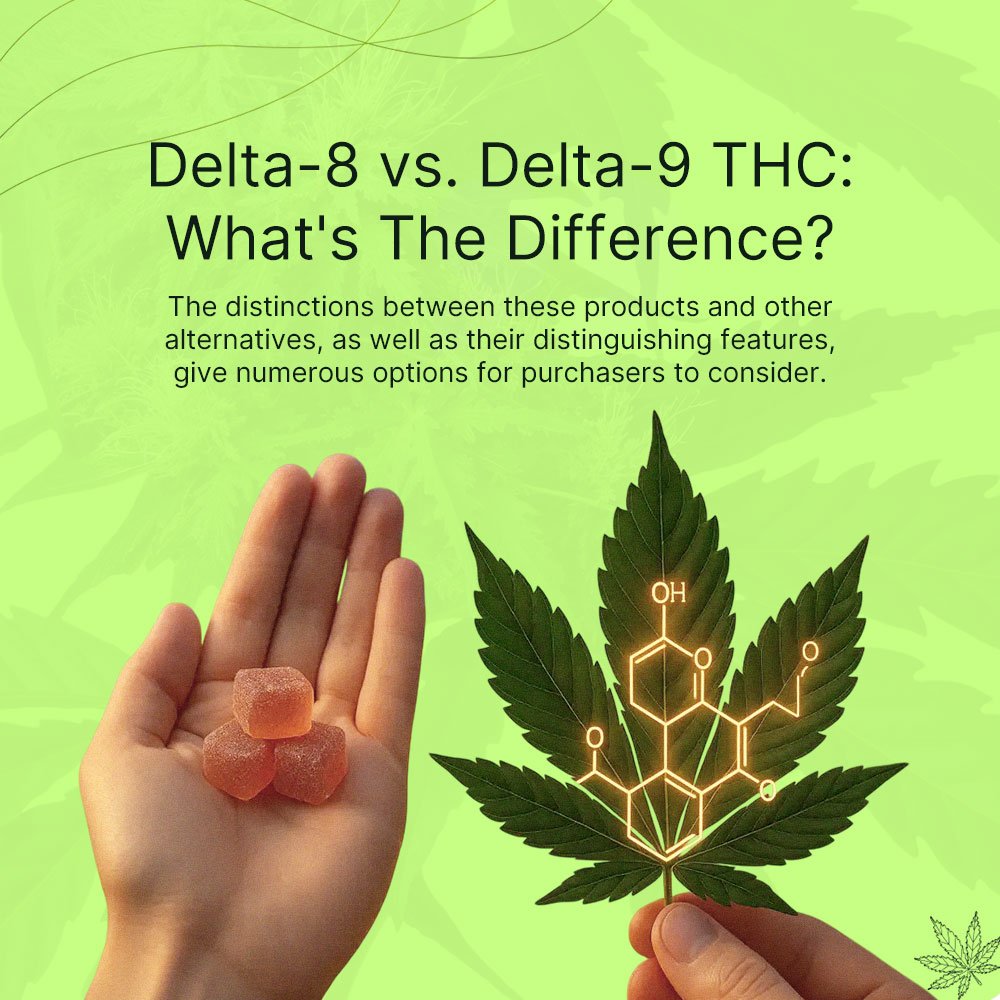
Delta-9 tetrahydrocannabinol (THC) is well known among cannabis and cannabidiol (CBD) users for producing an intoxicatingly euphoric “high”. Delta-9 THC, one of more than 100 cannabinoids in cannabis, is often found in high amounts in cannabis sativa flowers. Delta-8, a lesser-known cannabinoid, is also present in the flower, albeit at lower concentrations.
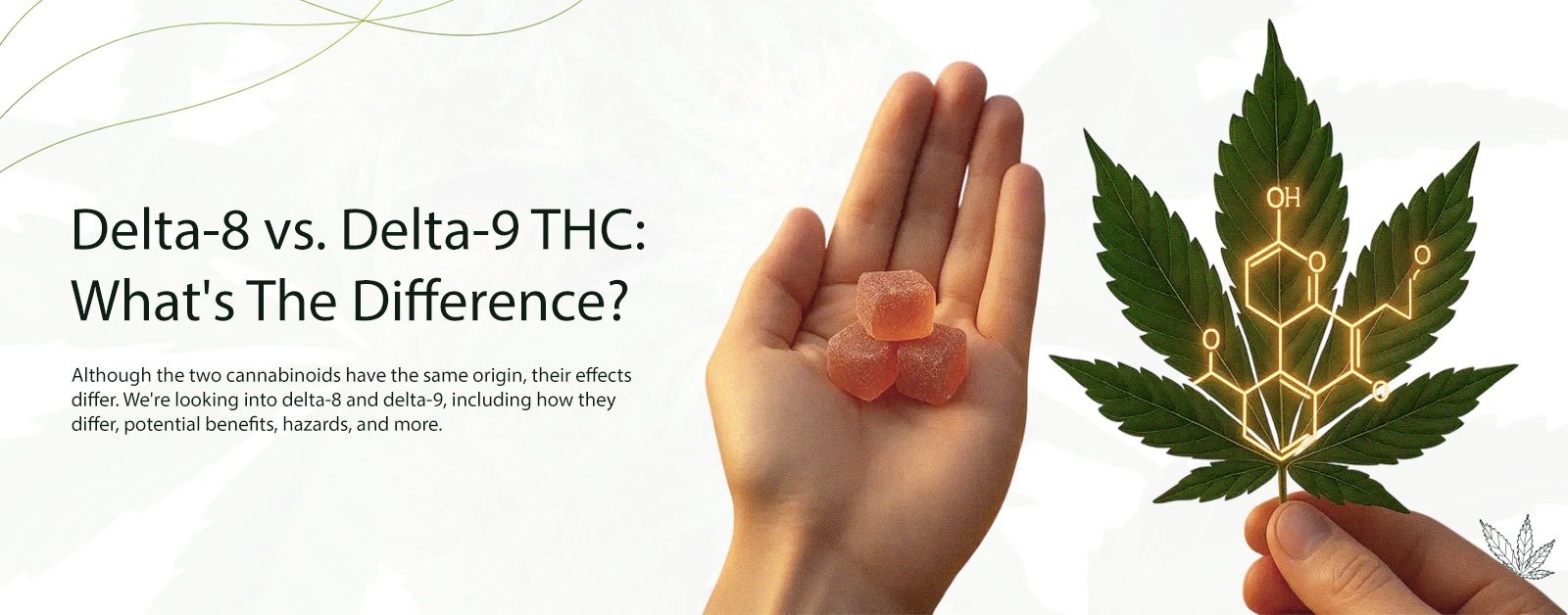
Although the two cannabinoids have the same origin, their effects differ. We’re looking into delta-8 and delta-9, including how they differ, potential benefits, hazards, and more.
What is Delta-8 THC?
Delta-8 THC is a naturally occurring cannabinoid (a type of molecule found in marijuana) in the cannabis sativa plant. However, because delta-8 exists in very low levels in plants, the delta-8 found in retail CBD or cannabis products is frequently synthesized via a chemical conversion of CBD into delta-8.
Delta-8 and delta-9 THC generate similar euphoric effects, however delta-8 has a potency. This is due to the way delta-8 binds to the body’s endocannabinoid system (ECS), which governs a variety of central nervous system processes such as emotional and cognitive processing, mood, and so on. Delta-8 attaches to this system via a double bond structure in a specific carbon, producing the same intoxication effect, but to a lesser extent than delta-9.
“Delta-8 is a cannabinoid (cannabis-like molecule) that is very similar to the main active ingredient of regular cannabis, delta-9,” says Peter Grinspoon, M.D., a physician at Massachusetts General Hospital, professor at Harvard Medical School, cannabis specialist, and author of Seeing Through the Smoke: Cannabis: An Expert Doctor Untangles the Truth About Cannabis. “It functions by triggering our cannabinoid receptors in the same way that cannabis does.”
However, due to delta-8’s low natural occurrence in the cannabis sativa plant, synthetic formulations of delta-8 may expose consumers to larger doses of the cannabinoid than non-synthetic CBD. Furthermore, the U.S. Food and Drug Administration (FDA) does not regulate commercially sold delta-8 or delta-8-containing products, which means that the chemical process by which the cannabinoids are made, as well as the sanitary standards of the factories in which they are made, are unregulated, potentially exposing users to unwanted risk and harm, according to the FDA.
Potential Benefits of Delta-8
Although more research is needed, delta-8 may provide some benefits, according to a 2022 study of over 500 participants published in the Journal of Cannabis Research. Participants rated delta-8 higher than delta-9 and other pharmaceutical medications, with 57% saying they used delta-8 instead of delta-9. Furthermore, 71% of subjects reported enhanced relaxation after consuming delta-8, with 68% experiencing euphoria and 55% experiencing pain relief.
Delta-8 is accessible in edible forms such as gummies, brownies, candies, chocolates, beverage infusions, tinctures, and vape cartridges.
Side Effects and Risks of Delta-8
Delta-8 is a relatively new drug, therefore many of its side effects and hazards are unknown.
“Likely, the risks will be similar to the regular delta-9 that is in cannabis, but we simply don’t know yet,” according to Dr. Grinspoon. “It’s extremely risky to buy and use delta-8, as this industry is entirely unregulated, and you truly have no idea what you are consuming; many of the samples are contaminated with industrial byproducts.”
One of the most common negative effects of delta-8 is its psychoactive, intoxicated properties, and the FDA warns that commercially available delta-8 may expose consumers to higher amounts of the drug than those found naturally in hemp extracts.
“Delta-8 is not at all regulated, so buyer beware,” says Dr. Grinspoon. “I would entirely avoid [delta-8] unless there is some consistent control. CBD and cannabis are mostly safe if purchased legally; nonetheless, be aware of known risks and avoid smoking.
Other side effects of delta-8 could include:
- Dry mouth.
- Eye redness.
- Short-term memory impairment or confusion
- Paranoia
- Food desires.
- Anxiety
The FDA has identified the following adverse occurrences associated with delta-8 use:
- Possible symptoms include vomiting and hallucinations.
- Symptoms include tremors, anxiety, and dizziness.
- Confusion
- Loss of consciousness.
More research is needed to discover the exact function of delta-8 in the body and to acquire a better understanding of its short- and long-term effects.
What is Delta-9 THC?
Delta-9 is a naturally occurring cannabinoid in the cannabis sativa plant. Delta-9 THC, one of the most well-known cannabinoids in cannabis, along with CBD, is known for its psychoactive properties and appears in high concentrations throughout the plant.
“This is the key element of cannabis, and it triggers our natural ‘endocannabinoid system,’ which we all have and which controls many biological systems and keeps us in balance,” according to Dr. Grinspoon.”
Delta-9, like delta-8, attaches to the body’s ECS system by a double bond. Delta-9, however, differs in that its double bind occurs on a different pair of carbons than delta-8, namely the ninth and tenth carbons in the carbon atom chain. The placement of this link not only contributes to the substance’s name, but it is also thought to be the cause of its psychoactive “high” effects, which are more noticeable in delta-9 than delta-8.
Delta-9, like delta-8, can be taken in a variety of methods, including food and beverage intake, vapor inhalation, smoking, sublingual administration via a tincture or oil, and topical application to a specific portion of the body with balms or cream.
Potential Benefits of Delta-9
Along with its euphoric properties, delta-9 is utilized as an alternative treatment for a variety of diseases, including chronic pain, glaucoma, and seizures. Several synthetic versions of delta-9 have been approved by the FDA to help treat chemotherapy-induced nausea and vomiting, as well as to help stimulate appetite in AIDS-related anorexia. These drugs are only available with a prescription and cannot be purchased from Farm Bill-compliant retailers.
Delta-9 may also assist control and maybe alleviate cancer-related symptoms such as insomnia, nausea, pain, tension, and worry. It could possibly be used to treat post-traumatic stress disorder (PTSD). However, more research on delta-9 and its impacts and roles in the body is required to assess its efficacy in medical therapies.
Side Effects and Risks of Delta-9
While delta-9 has the potential to provide numerous benefits, it also has a number of negative effects that should be considered before use. Like delta-8, the FDA does not oversee the commercial manufacture or distribution of delta-9, which may expose consumers to unnecessary danger.
The National Institute on Drug Abuse reports that various factors influence delta-9’s side effects. These factors include:
amount of THC used
- THC potency
- Other product ingredients.
- Method of consumption (ingestion or inhalation)
- Individual’s THC tolerance and experience level
- Additional medications are being used.
- Known or underlying medical conditions
- Age Sex Genetics
Furthermore, excessive usage of delta-9 may exacerbate various mental health disorders, such as anxiety and depression, as well as emotions of panic, distrust, irritability, and restlessness. Delta-9 may also affect cognitive function, such as memory, reasoning, and muscle movement.
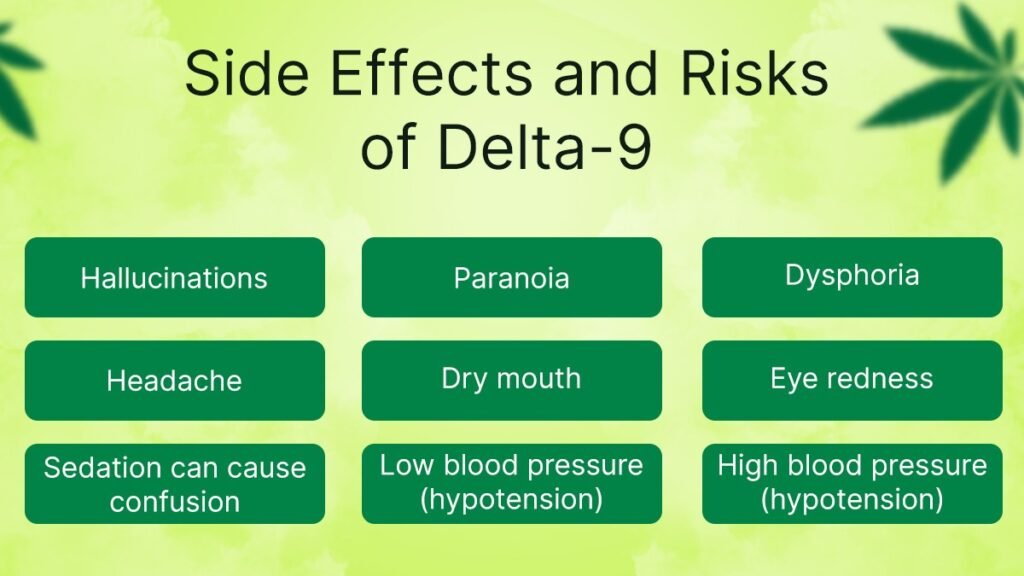
Other negative consequences of delta-9 may include the following, according to research:
- Hallucinations
- Paranoia
- Dysphoria
- Sedation can cause confusion.
- Headache
- Dry mouth.
- Eye redness.
- Low blood pressure (hypotension).
- High blood pressure (hypertension).
In some situations, THC consumption might cause seizures or seizure-like movements. According to Dr. Grinspoon, linked hazards include addiction and, in rare situations, psychosis.
Delta-9 is not suggested for use during pregnancy or in those who may become pregnant, as it may affect a baby’s health. According to the National Institute on Drug Abuse, studies on cannabis usage during pregnancy has been associated to lower birth weight, preterm birth, hospitalization, and potential death before one year.
What’s the Difference Between Delta-8 and Delta-9?
The fundamental distinction between delta-8 and delta-9 is the position of the carbon chain link and potency. While both compounds have double-carbon bond structures, delta-8’s double bond occurs on the eighth and ninth carbon chains, whereas delta-9’s double bond occurs on the ninth and tenth carbon atoms. This difference in position is assumed to be the reason delta-8 has a smaller effect than delta9.
Furthermore, delta-8 has lower organic quantities in the flower of the cannabis sativa plant, making it less powerful. Delta-8 is frequently synthesized from CBD through chemical processing to increase its potency. Delta-9 occurs in higher organic amounts in cannabis sativa flowers and is frequently taken directly from the plant rather than synthesized.
However, it is vital to highlight that these medicines require additional research to understand their precise role in the body, potential benefits (both short and long term), and the safest methods of administration.
As with anything intended for consumption, it is critical to consult with a trained health expert before using delta-8 or delta-9 to discover whether they are safe to use and appropriate for a person’s health needs or planned treatment.
How Does CBD compare to Delta-8 and Delta-9?
CBD, like Delta-8 and Delta-9, is a cannabinoid, which are naturally occurring chemicals present in cannabis plants. While they are all found in the cannabis plant, each has a unique effect on your body, according to Adam Perlman, M.D., a Forbes Health Advisory Board member. As he explains:
- Delta-8 THC produces softer, clearer effects, however it is often synthetic and synthesized using uncontrolled lab procedures, raising safety concerns.
- Delta-9 THC causes the conventional marijuana “high.”
- CBD is non-psychoactive, therefore it does not produce intoxication. According to a 2024 study in Neuropsychopharmacology, CBD administered alone (not in combination with THC or other medicines) is unlikely to cause functional impairment. CBD is also utilized for potential wellness advantages like as anxiety reduction and pain management (it comes in a variety of forms, including gummies and oils), although product quality varies greatly between brands.
The three cannabinoids are also regulated differently. “The legal status is complex,” explains Perlman. CBD derived from hemp is legally legal; delta-9, while increasingly legal in many states, is still federally illegal; and delta-8’s legal status varies depending on whether it is natural or manufactured.
Are Delta 8 and Delta 9 legal?
The legality of delta-8 relies on how it is extracted. When delta-8 is isolated from a hemp plant with less than 0.3% THC by dry weight, it is not classified as a federally restricted substance. However, if produced from marijuana, delta-8 is a federally controlled narcotic and is not lawful, as marijuana is still classified as a Schedule I Controlled narcotic by the federal government.
Certain states have allowed delta-9 THC for recreational or therapeutic use, and medical cannabis is now legal in more than half of the states, according to an assessment of legal and regulatory concerns surrounding cannabis in the United States published in Frontiers.
Conclusion
The safety and regulation of delta-8 THC and delta-9 THC are key considerations as these products gain popularity. Delta-9 THC is more extensively controlled, particularly in states where it is permitted for medical or recreational use, which contributes to product safety through testing and labeling standards. Delta-8 THC, while possibly lawful under federal law, is not regulated either nationally or by states, raising safety concerns due to uneven product quality and a lack of comprehensive study on its effects.
Consumers should not be obliged to investigate the safety of these products themselves, as they are not adequately competent to do so. Federal regulations should be clear and uniform.