The November 2026 Federal Hemp Ban is set to be one of the biggest changes in the U.S. hemp industry since the 2018 Farm Bill legalization of hemp-related products. Although the ban on hemp may sound like a total restriction, the reality is quite different.
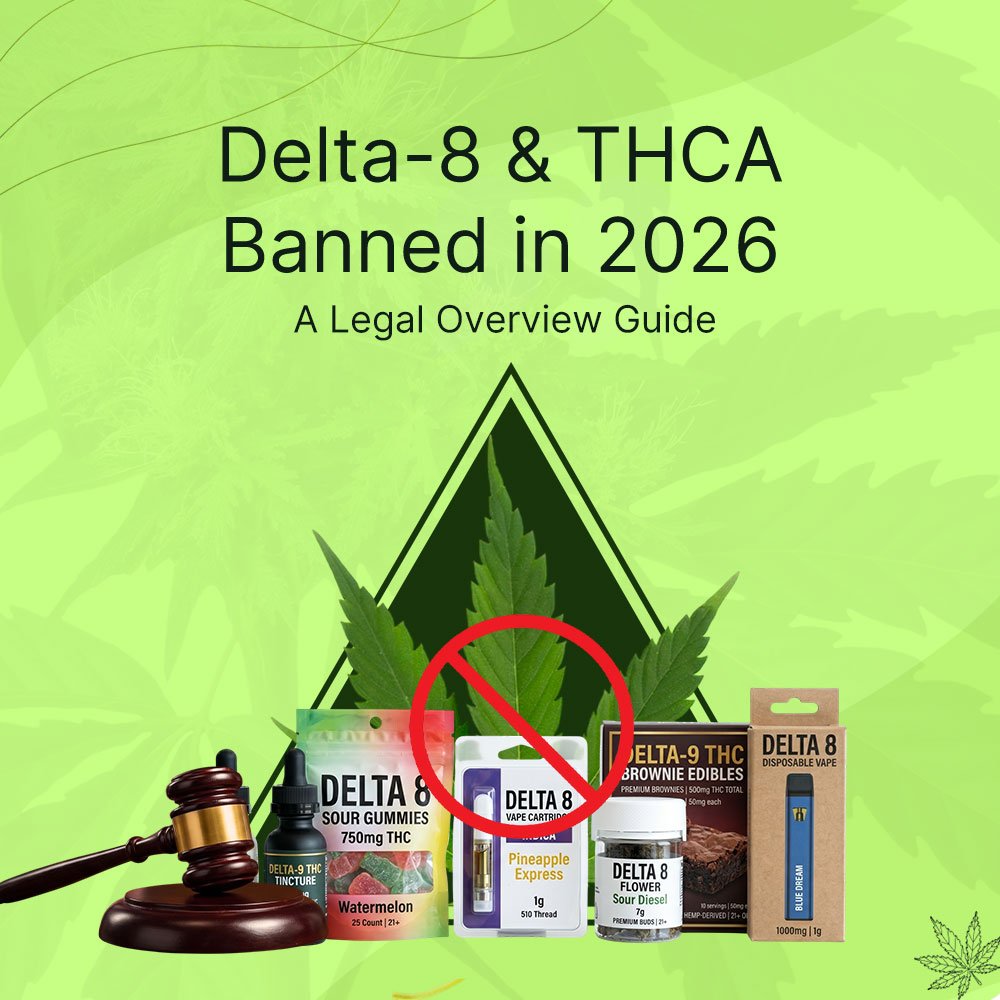
This federal law of 2026 is set to take effect after November 12, 2026, which is primarily aimed at restricting intoxicating hemp-derived cannabinoid products (including delta-8 THC, THCA flower, and many other synthesized cannabinoids. However, it does not necessary includes industrial grade hemp products like fiber, grain, or compliant CBD.
The U.S. Congress previously narrowed the legal definition of hemp in late 2025, which started a one-year transition period to put hemp cultivators, retailers, consumers, and investors on notice. For millions of Americans, this new legislation matters since it is a major part of the agricultural and retail forces. In this article, we are going to discuss further the U.S. government’s take on the hemp-related products, which redefine what “legal” hemp means in America.
What is Meant by the November 2026 Hemp Ban?
The law that is going to come into effect after November 2026 was actually enacted in November 2025. This new law on hemp-related products further tightens the THC thresholds and targets products that exclusively exploit the hemp loophole outlined in the Farm Bill 2018.
What Did the Farm Bill 2018 State for Hemp?
According to the old framework that was in effect since 2018, hemp was legal to sell, consume, and possess as long as it contained no more than 0.3% delta-9 THC by dry weight. As a result, the hemp manufacturers begin to market products containing Delta THC-8, THCA, and other intoxicating cannabinoids as federally legal hemp.
What is Going to Change in November 2026?
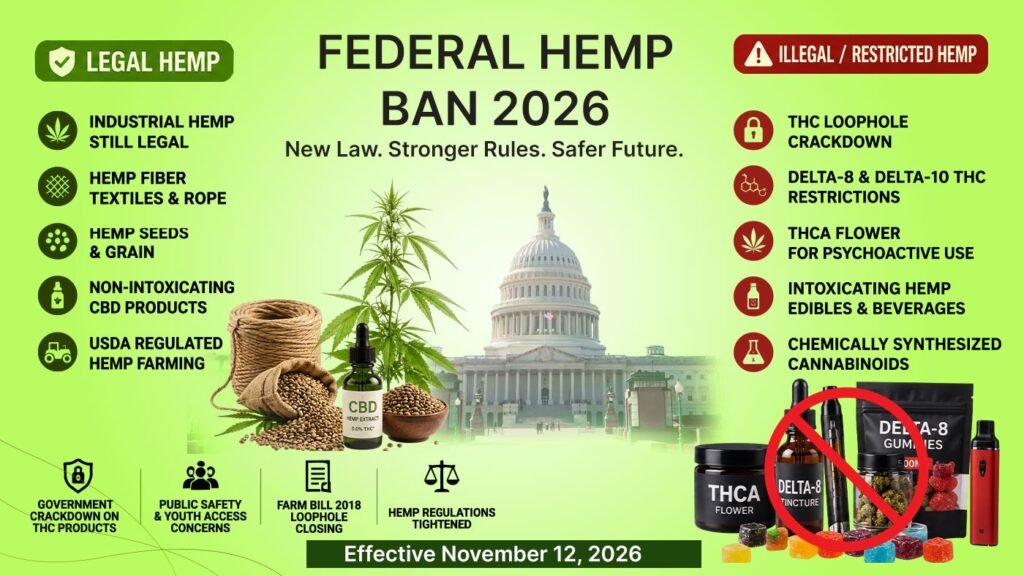
After November 12, 2026, the federal law shifts towards a wider “total THC” standard and imposes more restrictions on the definition of cannabinoids. In other words, many products that are sold as legal hemp would be classified as illegal or controlled substances under the new law.
Does the New 2026 Law Implements on All Hemp?
No, the November 2026 Federal Hemp ban does not ban industrial hemp farming altogether. Any hemp products that are cultivated for fiber, grain, textiles, construction materials, and certain regulated CBD applications would still remain lawful for the USDA. For this purpose, the USDA hemp production program established under the 2018 Farm Bill continues to regulate compliant agricultural hemp.
The following types of Hemp may remain legal:
- Hemp fiber
- Hemp grain
- Industrial hemp seed
- Some non-intoxicating hemp extracts
The following types of Hemp may become illegal:
- Chemically synthesized cannabinoids
- Delta-10 THC
- Delta-8 THC
- Many intoxicating hemp edibles
- THCA flower is marketed for psychoactive use
Why Congress Moved Toward the November 2026 Federal Hemp Ban
The Hemp Loophole Problem
The 2018 farm bill was presented to legalize agricultural hemp. But instead, it broadly unregulated the intoxicating cannabinoid market. The problem with the 2018 Farm Bill was its narrow focus on the Delta-9 THC loophole which allowed manufacturers to rapidly market the following products:
- Delta-8 gummies
- THC-infused beverages
- Vape cartridges
- High-THCA hemp flower
These products were still intoxicating and reached consumers who did not require much restriction or less testing oversight as compared to state-regulated cannabis. This open abuse of the Delta THC-9 loophole has made lawmakers, state attorneys general, and public health groups argue about the safety of consumers and state cannabis frameworks. According to the reports, 39 state attorneys general pushed Congress for stronger federal action.
Public Safety and Youth Accessibility
Another major challenge with the existing Farm Bill 2018 was that manufacturers were using its loopholes, which made accessibility of hemp-related products much easier for the public and especially for teenagers.
Hemp-derived intoxicants were often sold outside licensed dispensaries, sometimes in convenience stores or online, with inconsistent age verification. Many critics argued that products appealing to minors or containing inaccurate labels created an urgent regulatory gap.
2018 Farm Bill vs November 2026 Hemp Ban: Brief Comparison
| Criteria | Farm Bill 2018 (Old Rule) | November 2026 Ban (New Rule) |
|---|---|---|
| THC Amount | Delta-9 THC only | Total THC (including all intoxicating cannabinoids) |
| Delta-8 THC | Legally grey (hemp-derived) | Totally Banned |
| THCA | No regulations | Banned due to THC conversion |
| Hemp Definition | Delta THC-9 Less than 0.3% | Total THC per container should be less than 0.4mg |
| CBD Products | Widely legal as long as compliant with Delta-9 | Most of the full-spectrum products remain non-compliant |
| Manufacturer Loopholes | Allowed as THC alternatives | Banned as a total THC standard |
| Testing | Misconception between legal vs positive results | Clear restriction as long as it tests positive |
| Employment Policy | Often not clear or remains outdated | Should highlight hemp-derived intoxication |
| State and Federal Laws | Limited ban varying from region | More complex due to varying state laws |
How Does the November 2026 Federal Hemp Ban Affects Economy?
Multi-Billion Dollar Industry at Risk
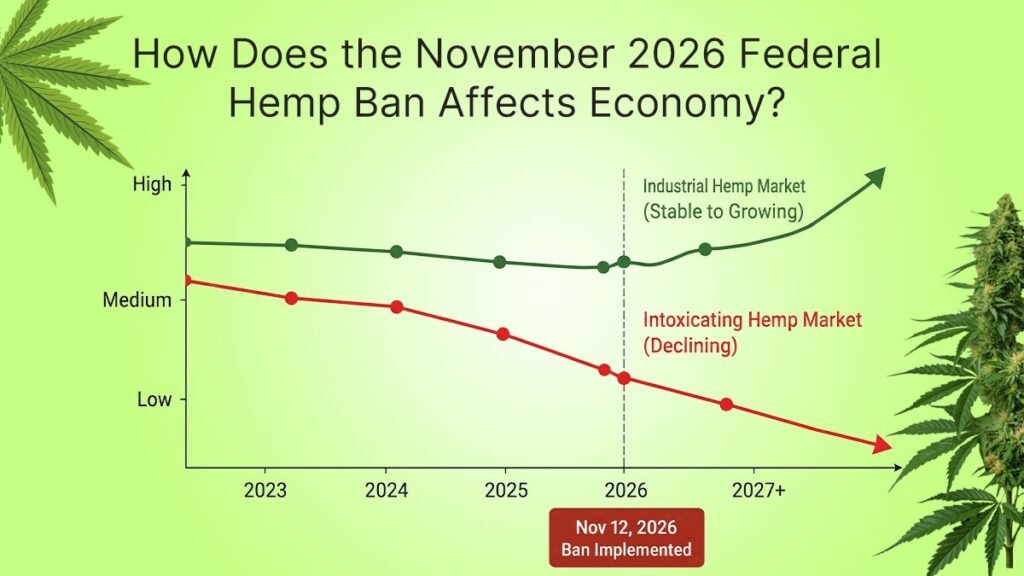
The U.S. hemp market experienced a major boom after the 2018 Farm Bill. According to the industrial experts, hemp-related products contributed tens of billions of U.S. dollars in economic activity and support hundreds of thousands of jobs, though exact figures vary widely by segment. Now the November 2026 federal restriction on the intoxicating hemp products may significantly reduce revenues for:
- Smoke shops
- Online cannabinoid brands
- Hemp processors
- White-label manufacturers
- Specialty retailers
Besides the major manufacturers and enterprises, the new bill may also affect the smaller industry business models that were made around delta-8 and THCA products.
Farmers Could Face Mixed Outcomes
For farmers focused on industrial hemp, the November 2026 changes may actually reduce market confusion by separating agricultural hemp from psychoactive retail products. But growers cultivating flowers for cannabinoid extraction could face severe losses if demand collapses.
This split may produce two hemp economies:
- Traditional agriculture
- Consumer cannabinoid products
The second category faces the greatest disruption.
How the November 2026 Federal Hemp Ban Affects Consumers
Will CBD Still Remain Legal After November 2026?
CBD legality remains more stable than intoxicating cannabinoids, but FDA restrictions on food, beverages, and supplements still complicate the market. Hemp-derived CBD itself is not automatically banned under the November 2026 framework if it meets legal definitions. However, product formulations and labeling could face tighter scrutiny.
The following products may disappear from the market under the new law:
- THCA flower removed from mainstream retail
- Delta-8 gummies banned or reformulated
- Hemp vapes restricted
- Shipping limitations
- Price spikes from compliance costs
Would State Laws Override Federal Law of November 2026?
States may still regulate hemp more strictly, and many already do. Federal changes set a baseline, but state-by-state rules will continue to create a patchwork market.
What Should Hemp Businesses Do Before November 2026?
The hemp, Delta, or cannabis related businesses still have a chance to stay complaint during this shift that is redefining the hemp market. Before November 2026, companies can still:
- Reformulate products
- Shift to compliant cannabinoid profiles
- Diversify into industrial hemp
- Challenge regulations legally
- Lobby Congress for amendments
The time window till November 2026 gives some businesses time to survive by adapting early.
Political Implications of the November 2026 Federal Hemp Ban
Bipartisan Support for Crackdown
Unlike broader cannabis legalization debates, hemp-derived intoxicants have drawn bipartisan scrutiny. Conservative and progressive lawmakers alike have raised concerns about youth safety, product standards, and market fairness.
Impact on 2026 Elections
Hemp regulation could become a regional political issue, especially in:
- Kentucky
- Colorado
- Oregon
- California
- Texas
Agricultural states may prioritize farmer protections, while urban markets may focus on consumer regulation.
What Businesses Should Do Now?
To give a better picture of how to survive the new November 2026, here is what the relevant parties in the cannabis industry should do:
Retailers
Retailers should audit inventory immediately. Products legal today may become federally problematic after November 2026.
Manufacturers
Manufacturers should invest in:
- Compliance testing
- Legal review
- Transparent labeling
- Non-intoxicating alternatives
Consumers
Consumers should monitor:
- Product ingredient changes
- Shipping policies
- State law updates
- FDA guidance
Statistical Snapshot: Hemp in America
According to the USDA and federal regulatory frameworks:
- Hemp became federally legal under the 2018 Farm Bill
- USDA finalized national hemp production rules in 2021
- New federal restrictions were enacted in 2025, with implementation in 2026
This timeline shows how quickly hemp moved from legalization to regulatory tightening in less than a decade.
Is it Possible for Congress to Reverse the November 2026 Federal Hemp Ban?
The laws regarding hemp tend to remain ever-changing and any amendment is always uncertain. The Congress could:
- Amend THC thresholds
- Carve out CBD protections
- Create a regulated intoxicating hemp market instead of a ban
- Delay implementation
However, November 12, 2026 remains as the effective date for the new ban imposed on hemp-related products, which is a legal milestone itself.
Preparing for the New Shift in the Cannabis Market After November 2026
The November 2026 Federal Hemp Ban is less about ending hemp and more about redefining it. For the American consumers, the major impact would likely fall on intoxicating hemp-derived products that flourished under the 2018 Farm Bill loophole.
As for now, the industrial hemp may survive and even stabilize, while delta-8, THCA, and similar markets face major disruption. But if you want to stay relevant in the cannabis market beginning November 12, 2026, you can follow the suggestions mentioned in this article to remain relevant.
FAQs
How is the November 2026 Federal Hemp Ban different from the 2018 Farm Bill?
The 2018 Farm Bill legalized hemp federally as long as it contained no more than 0.3% delta-9 THC by dry weight. The November 2026 Federal Hemp Ban significantly tightens these rules by expanding THC definitions and targeting intoxicating cannabinoids beyond just delta-9 THC, closing many loopholes that businesses previously used.
Will online hemp retailers be able to sell hemp after November 2026?
Shipping laws are expected to become much stricter. Many intoxicating hemp-derived products may face federal restrictions that could limit or prohibit interstate commerce. Retailers selling compliant industrial hemp or certain legal CBD products may still operate, but businesses will likely need stronger testing, documentation, and legal compliance to avoid shipping violations.
Will consumers who purchased legally before November 2026 face penalties?
This will depend on final federal enforcement guidelines and state laws. In many cases, legal purchases made before implementation may not automatically become criminal, but products deemed federally restricted after November 2026 could create legal risks depending on possession laws, transportation, and state enforcement. Consumers should monitor legal updates carefully.
Will states still control their own hemp laws after the federal changes?
Yes, states will continue to enforce their own hemp and cannabis regulations, but federal law will establish the national baseline. Some states may impose stricter controls, while others may build regulated pathways for certain hemp products.
Could prices for legal hemp products increase after November 2026?
Yes, compliant products may become more expensive due to increased laboratory testing, legal reviews, licensing costs, and supply chain changes. Businesses passing compliance expenses to consumers could raise retail prices.
What should hemp businesses do before the November 2026 deadline?
Businesses should review product formulas, strengthen compliance protocols, monitor federal and state law changes, diversify product lines, and consult legal experts to reduce disruption before the new federal rules take effect.